The program
Twelve weeks of the skills dentists actually hire for
We built the program from the perspective of practicing dentists and experienced assistants: the core skills you need to start a job right away, taught in the setting of an actual dental office.
Format
Online theory, in-office practice
Lectures, reading and quizzes live on our online platform so you can do them on your own schedule. Class time is reserved for what cannot be done at home: working chairside in a real operatory on the same equipment you will use in your first job.
Classes meet two evenings a week from 6:00–9:00 PM at your campus. During the program you also complete 80 hours in a dental office, shadowing and assisting working professionals. Externship shifts follow the host office’s available hours and may require daytime availability. Discuss your work schedule with admissions before enrolling.
Plan classes, study, and the externship around your job →
You finish with a certificate of completion, Basic Life Support (CPR) certification, a portfolio of hands-on skills, and placement help from a school that talks to hiring dentists every day.
Included in $5,900
- Digital access to the textbook, plus study aids
- A pair of scrubs (top and bottom)
- All lab materials, PPE and radiology supplies used in class
- CPR (BLS) certification
- Access to the online lesson platform for the full program
- 80 hours of supervised office experience
- Job placement assistance after graduation
To enroll you need
- Age 18 or older, with a high school diploma, GED or equivalent
- Two class evenings each week, online study time, and availability for the externship
- $500 at enrollment; the rest paid as you go or financed
The learning experience
See the skills take shape
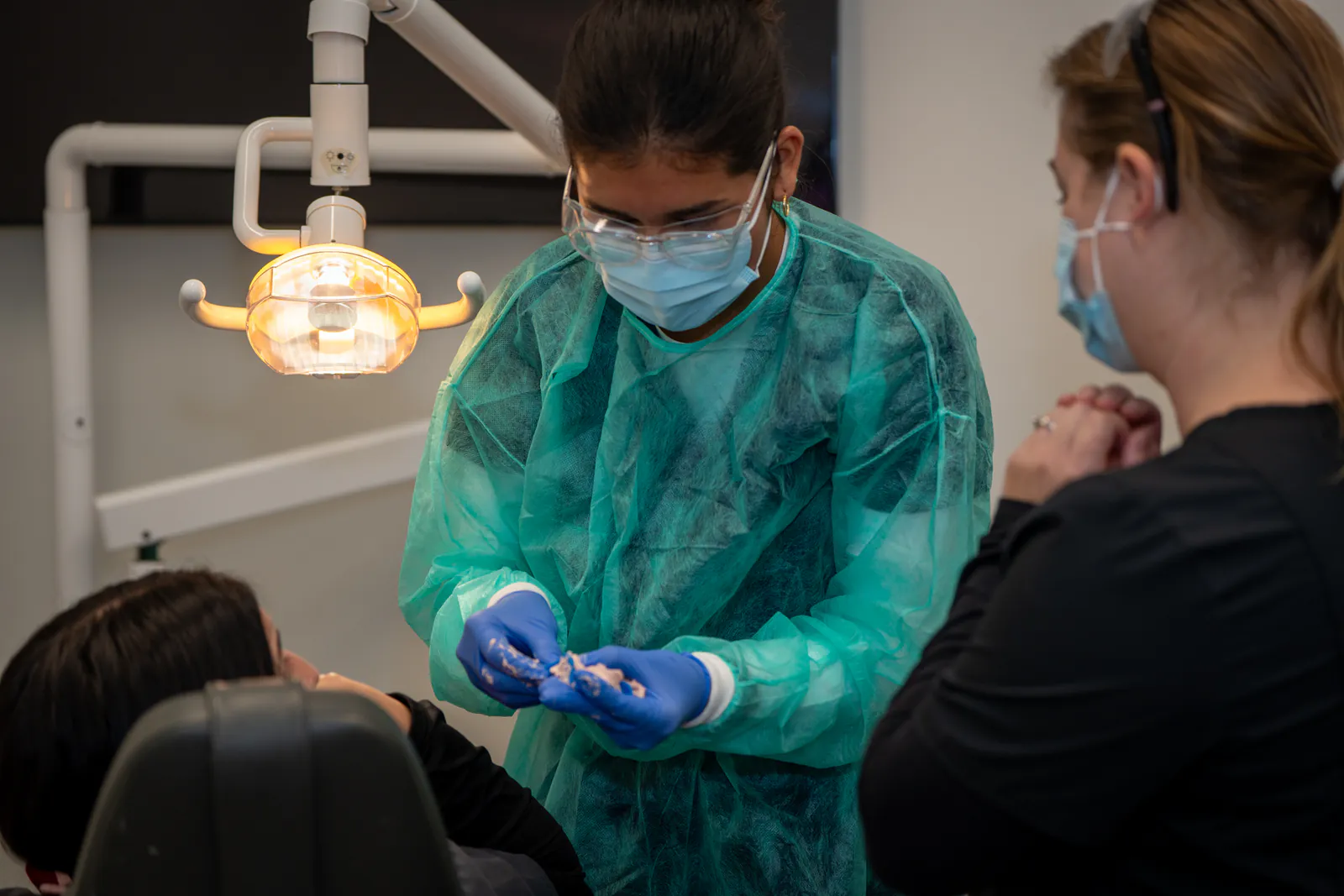
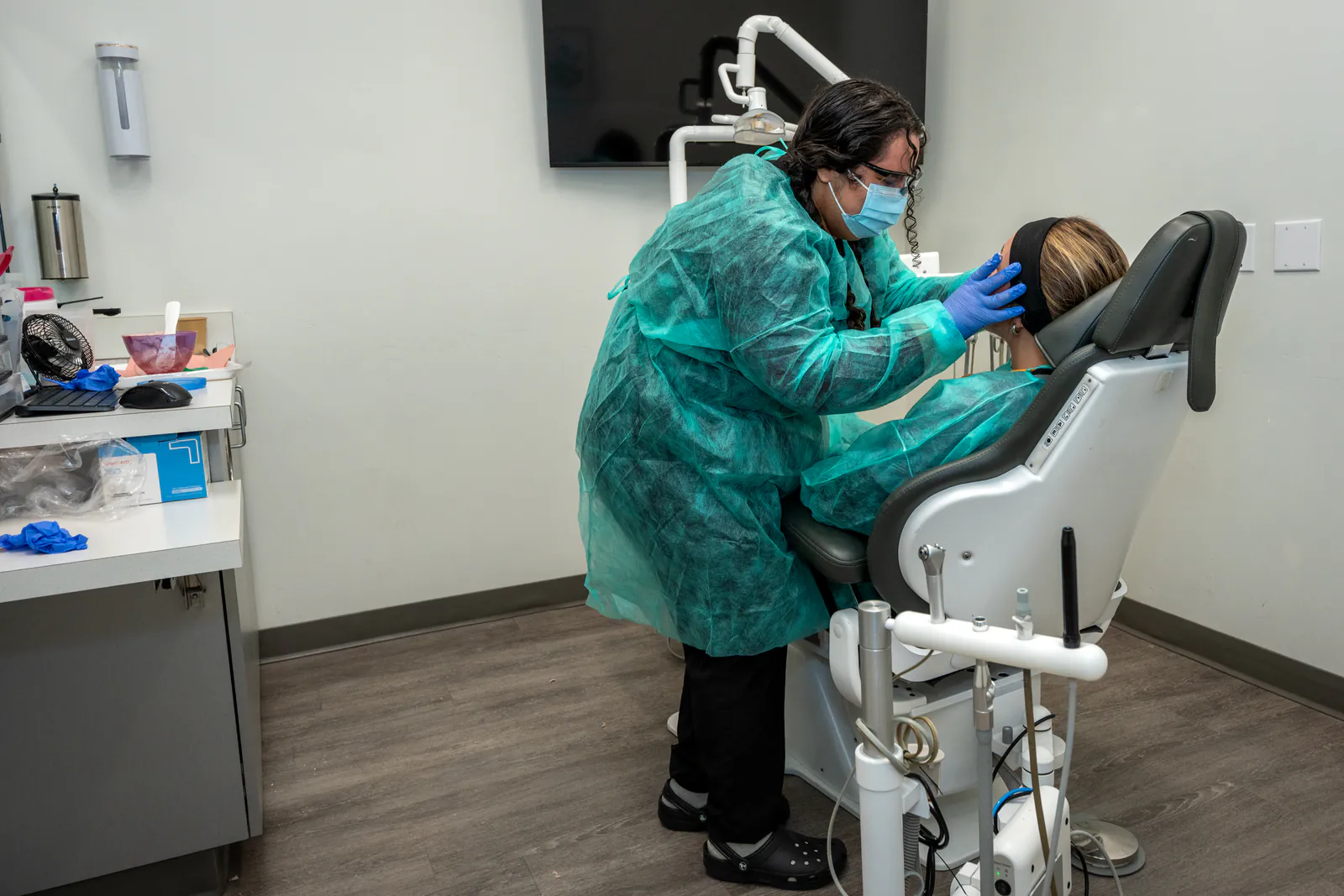
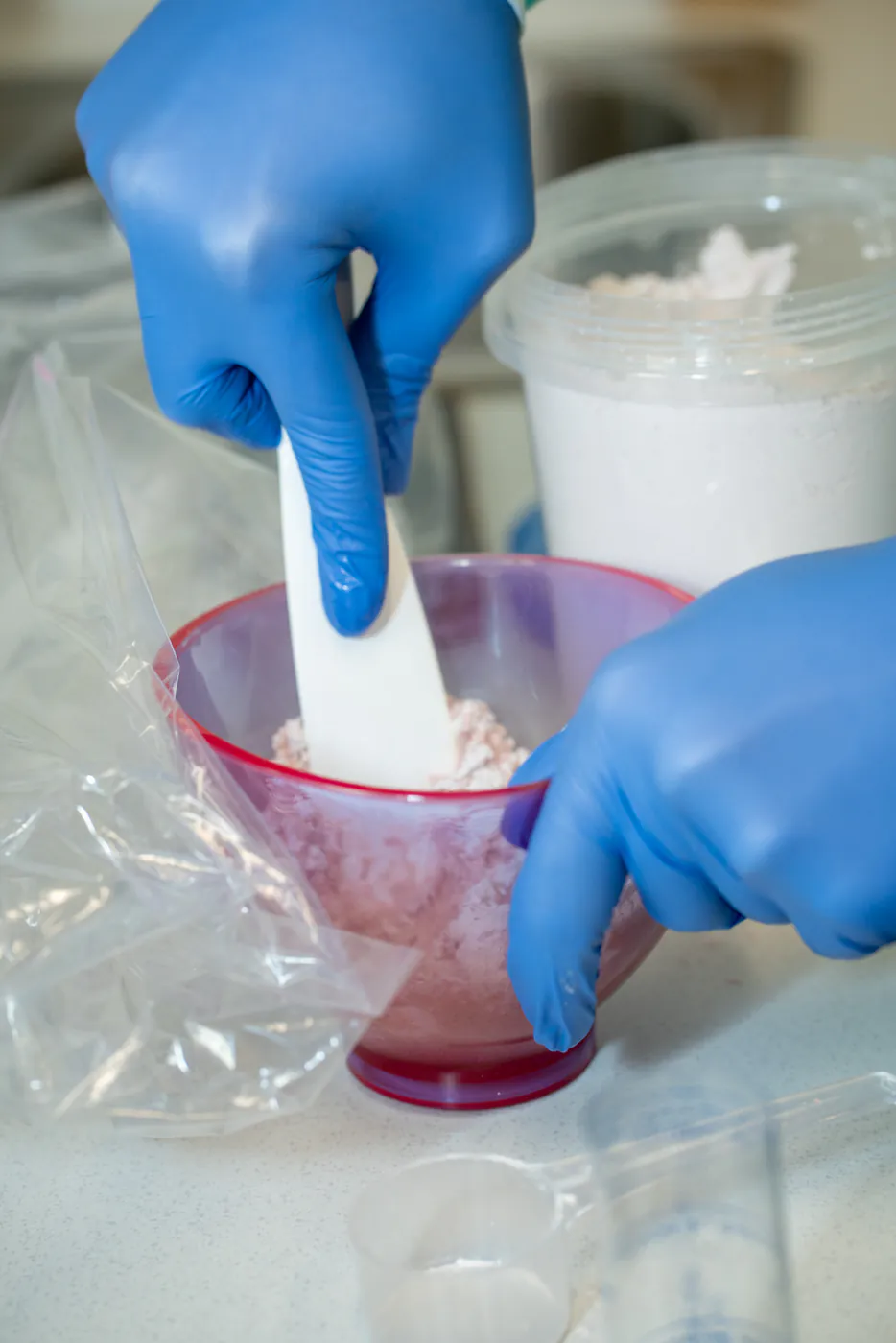
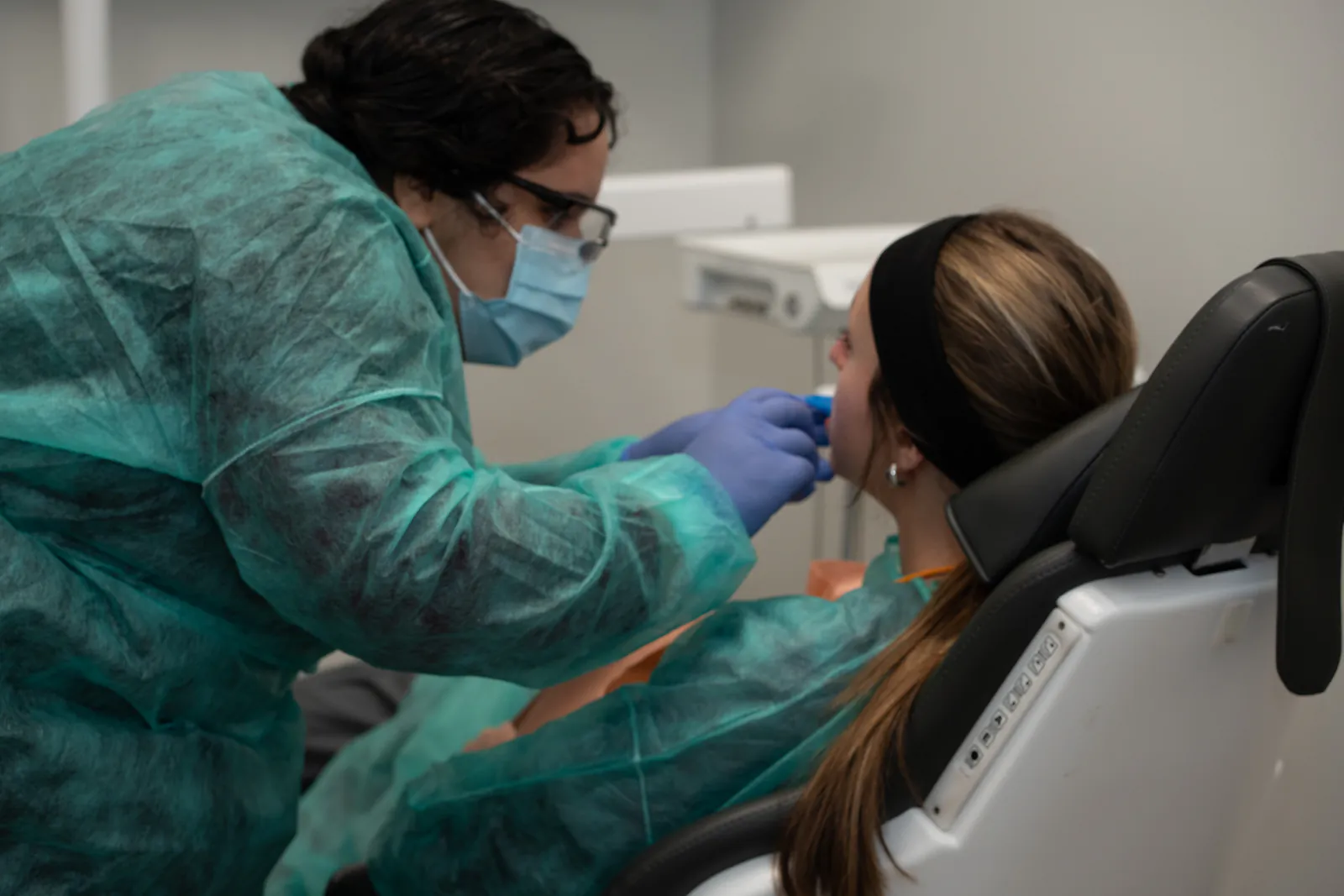
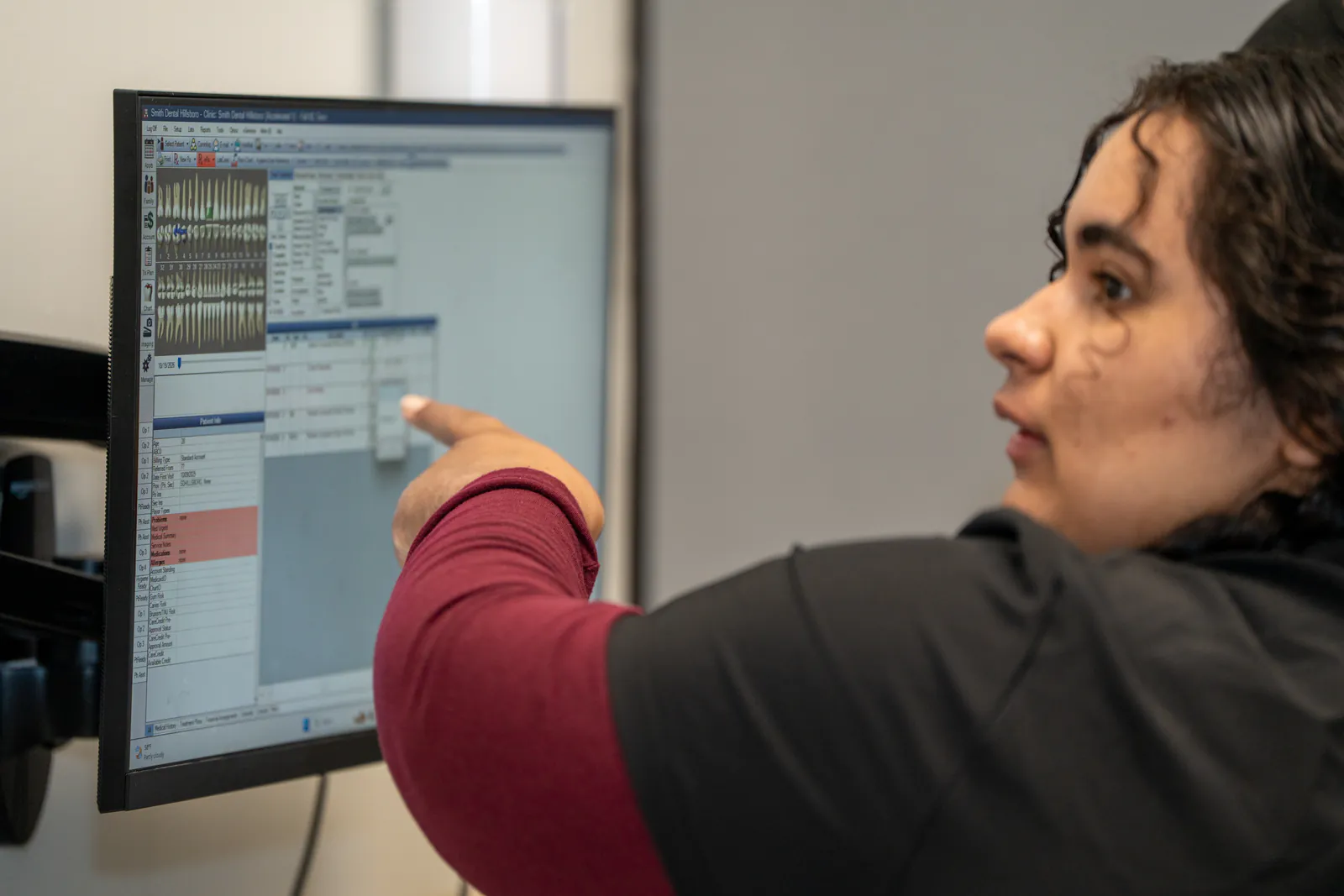
A closer look at the skills students practice in class at the Hillsboro campus: working chairside, impressions and charting.
01
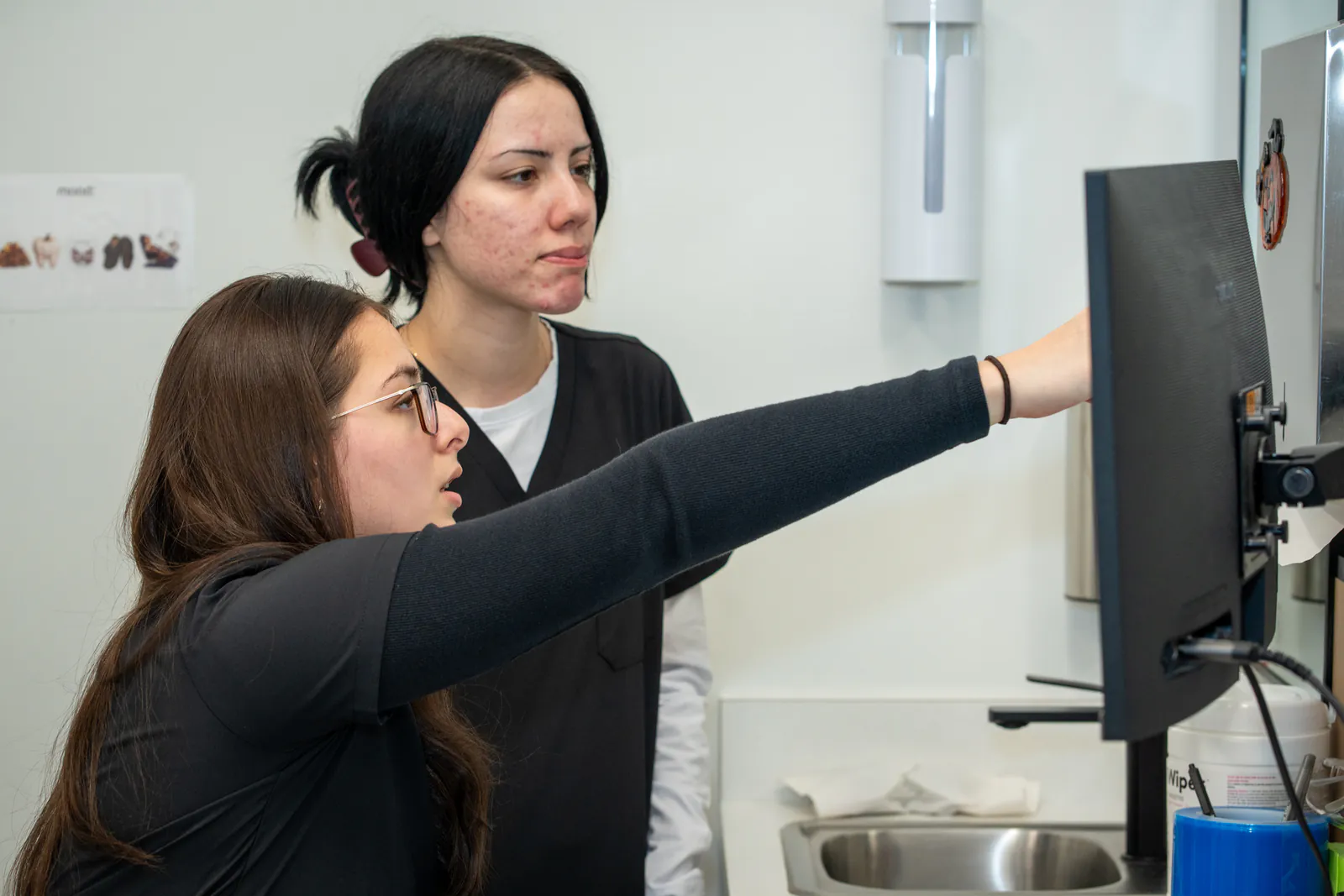
Learn with an instructor close by
Questions get answered at the computer and the chair.
02
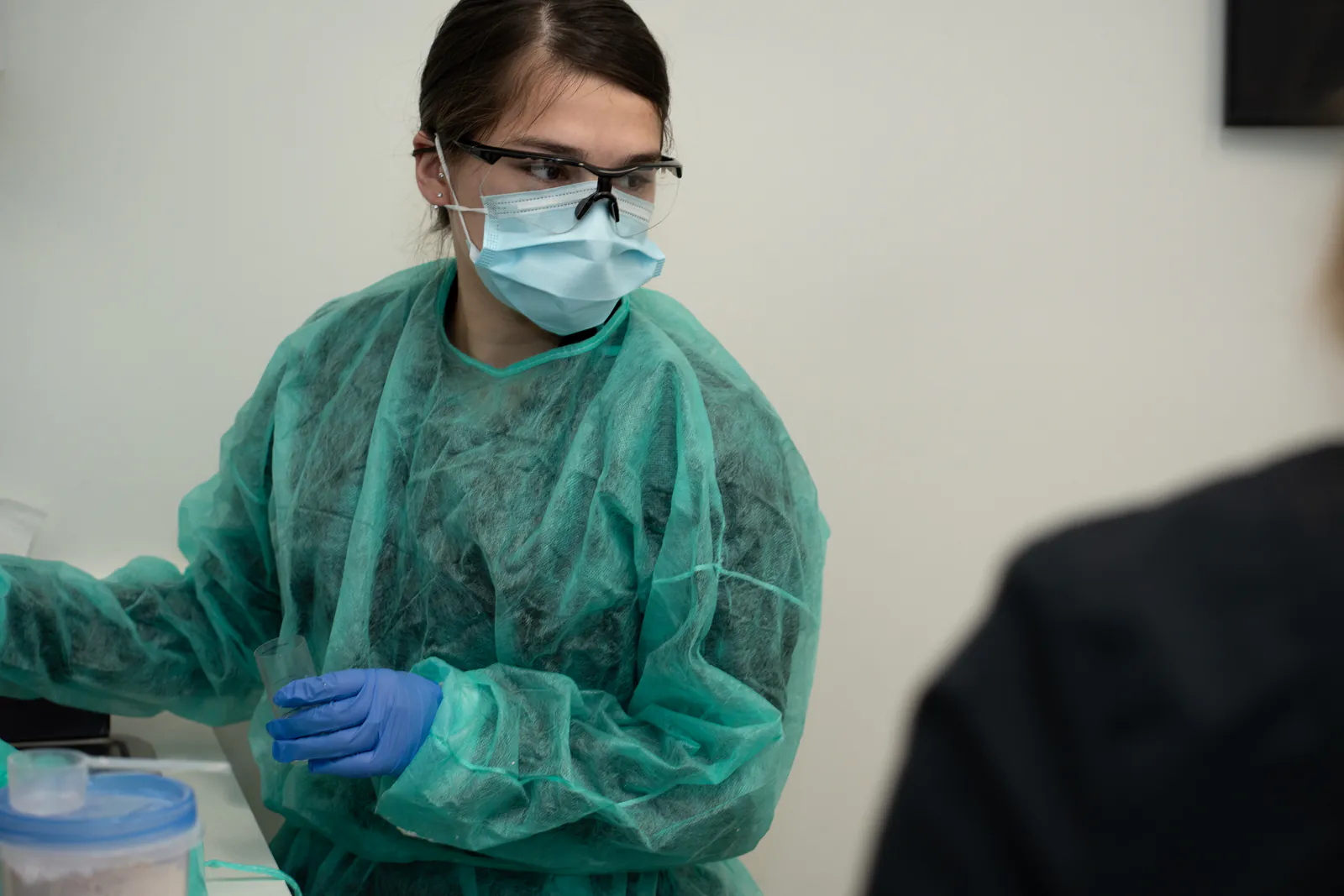
Gown up for clinical practice
Gown, mask and eyewear before working on a classmate.
03
Work together chairside
Putting clinical skills into practice at the dental chair.
04
Mix impression material
Measuring and mixing alginate to the right consistency.
05
Take impressions
Fitting the tray, then taking the impression on a classmate.
06
Chart at the computer
Practicing charting in dental practice software.
Curriculum
Twelve weeks, one course each
The week-by-week schedule from our 2026-2027 program catalog. Each week pairs online lessons with hands-on practice in the operatory.
1DA 101Orientation and Introduction to the Dental Assistant ProfessionThe dental office, the team, the terminology and your role in it.
An overview of the dental profession and the dental assistant's role, dental specialties, and expectations for professionalism and teamwork. Orientation to the office, equipment and training environment; dental terminology and commonly used instruments; basic equipment setup, maintenance and safety. Patient confidentiality and an overview of HIPAA and other regulations that apply.
2DA 102Sterilization, Infection Control and MaintenanceKeeping patients and the team safe: PPE, disinfection, sterilization and OSHA standards.
Hand hygiene, personal protective equipment (PPE), and standard disinfection and sterilization procedures. Safe use of ultrasonic cleaners and autoclaves; instrument cleaning, packaging and sterilization; cleaning, lubricating and sterilizing handpieces. OSHA standards and safety guidelines, including Safety Data Sheets (SDS), asepsis and preventing cross-contamination.
3DA 103Dental Anatomy and Physiology, DentitionTeeth, the skull, and the tissues that support them.
The form and structures of the natural teeth; identifying teeth by name, number and letter with the Universal Numbering System for permanent and primary teeth; tooth surfaces and landmark teeth. Anatomy of the skull, the bones of the face, the temporomandibular joint (TMJ) and the muscles of mastication; the head and neck; and the periodontium: the alveolar process, periodontal ligament and gingiva.
4DA 104Dental Charting and DentrixCharting by hand and in Dentrix, the software many offices use.
Preparing a dental chart with the correct symbols and abbreviations, on paper and in Dentrix practice management software: existing conditions, planned treatment, procedure codes and clinical notes. Periodontal charting (pocket depths, bleeding, mobility, furcation). An introduction to treatment plans, scheduling, check-in and check-out, insurance terms and claims, and how the front office and clinical team work together.
5DA 105Dental Instruments and EquipmentFour-handed dentistry: setup, instrument transfer, suction and isolation.
Operatory setup and breakdown, tub and tray preparation, and instrument identification. Four-handed dentistry: instrument transfer in the transfer zone, high-volume and low-volume suction, isolation with cotton rolls, dry angles and dental dams, retraction and keeping a clear field. Patient and operator positioning, the dental chair and light, handpieces and burs, the air/water syringe, and basic equipment troubleshooting.
6DA 106Dental X-Rays, Including CBCT and PanoramicTaking diagnostic X-rays safely, on mannequins and then on patients under supervision.
Radiation safety and infection control for radiography; assembling and using XCP (Rinn) positioning instruments with film and digital sensors; paralleling and bisecting techniques. Full mouth series, bitewings and periapicals; processing, mounting and judging diagnostic quality; adapting for small mouths and gag reflexes. An introduction to panoramic, cephalometric and CBCT imaging, and the basics of reading a radiograph.
7DA 107Vital Signs, Anesthesia and CPR TrainingPatient care basics, assisting with anesthesia, and your CPR certification.
Taking vital signs and Basic Life Support (CPR) certification. Local anesthesia: common injection types, anesthetic agents and vasoconstrictors, handling and passing the syringe safely, needle-stick prevention and sharps disposal. An introduction to nitrous oxide: how it works, why it is used, and the state rules for administering and monitoring it.
8DA 108Impressions and Introduction to CEREC and CAD/CAMAlginate impressions, study models and digital dentistry.
Dental impressions with alginate: mixing, loading the tray, positioning the patient and removing the impression. Pouring and trimming study models and using the lab equipment. Bite registration. An introduction to CEREC and CAD/CAM, the digital systems used to design and make restorations.
9DA 109Dental MaterialsFillings, cements, liners and how to mix, handle and deliver them.
Restorative materials including amalgam, composite and glass ionomer: their properties and when each is used. Liners and temporary and permanent cements; working times and consistency. Bonding, curing-light operation and safety, finishing and adjustments. Assisting during restorative procedures: setup, instruments, moisture control and visibility for the dentist.
10DA 110Practical: Restorative and CrownHands-on practice assisting with fillings and crown preparation.
Shade selection; assisting with crown and bridge procedures from setup through tooth preparation; impression, bite registration, build-up and temporary materials; cord placement and impression taking. Making and placing temporary (provisional) crowns. Fixed and removable prosthodontics: crowns, bridges, partial and complete dentures, and the delivery appointment.
11DA 111Practical: ExtractionsHands-on practice assisting with oral surgery.
Oral and periodontal surgical instruments: forceps, elevators, root picks, retractors, surgical suction, scalers, curettes and suturing instruments. Assisting with extractions, third molar removal, implant placement, bone grafting, biopsies and periodontal therapy. Maintaining a sterile field, surgical setup, and post-operative instructions for the patient.
12DA 112Practical: Permanent Crown, Oral Pathology and the Final Practical ExamSeating the final crown, recognizing oral disease, and showing what you can do.
Assisting with the permanent crown appointment and an introduction to oral pathology. The final exam is a comprehensive practical: patient positioning, instrument transfer, moisture control and operatory workflow; radiographic technique; dental materials and impressions; infection control and sterilization; charting and documentation in practice management software; and patient communication and professionalism.
Also covered across the twelve weeks
These subjects run through several weeks of class, so they don’t appear as their own course above.
Preventive dentistry
- Coronal polishing with a slow-speed handpiece
- Dental sealants
- Plaque and stain removal
- Fluoride, nutrition and patient education
- Brushing, flossing and denture-care instruction
Pediatric dentistry
- Restorations on children
- Stainless steel crowns
- Pulpotomies
- Tray setups and materials for pediatric procedures
Periodontics
- Instrument transfer for periodontal procedures
- Assembling and using ultrasonic scalers
- Periodontal charting
- Assisting with periodontal therapy
Endodontics
- Why and when root canals are done
- Dental dams
- Manual and rotary instruments
- Apex locators, irrigants and medicaments
- Sealers, obturation and final restorations
Orthodontics
- Braces, removable appliances and clear aligners
- Classes of occlusion (I, II, III)
- Ligature placement and adjustment
- Orthodontic records and impressions
Oral surgery and implants
- Extractions and third molars
- Implant placement and bone grafting
- Biopsies
- Sterile field and surgical setup
- An introduction to dental lasers
Front office and practice software
- Phone skills, scheduling, check-in and check-out
- Dental insurance terms, procedure codes and claims
- Dentrix charting, clinical notes and treatment plans
- Recare, lab-case tracking and document scanning
Safety, law and professionalism
- OSHA standards and Safety Data Sheets
- HIPAA and patient confidentiality
- Oregon laws and rules for dental assistants
- Professional appearance, communication and teamwork
Externship
The externship is designed to expose the trained students, once they have completed the initial lecture, laboratory, clinical and final examination components of the program, to the entire dental practice environment, to round out their training program and prepare them for employment in a dental practice. The student will be assigned to a 2-week rotation in the dental practice. Travel will be required to externship sites. This course requires a final evaluation and timecards (provided) and further prepares students for employment as a dental assistant. The externship is typically scheduled during the office hours of the assigned practice but may involve early morning/evening hours as well, based on the needs of the clinic. Students may not miss more than 10 hours which are required to be made up in order to graduate.
Radiology certification prep is built in
Our RHS Prep course for the DANB Radiation Health and Safety (RHS) exam is built into the program, and most students take the DANB RHS exam right after finishing the course, around week 12. Passing RHS is the exam step toward Oregon's Certificate of Radiologic Proficiency.
Want the full document? Download the program catalog (PDF) or the Oregon fact sheet.
Questions
About the program
How long is the program?
Twelve weeks. Classes meet two evenings a week from 6:00 to 9:00 PM, and the online lessons fit around your job. You also need time for online study and an 80-hour externship, which may involve daytime hours.
Do I need any experience or a college degree?
No. You need to be at least 18 with a high school diploma, GED or equivalent. Everything else is taught in the program.
Where do classes happen?
Inside working dental offices in Hillsboro, Portland and Salem, on the same chairs and equipment you will use on the job. Lectures and theory are online so evenings stay hands-on.
What is the externship?
Eighty hours of supervised experience in a dental office during the program, where you shadow and assist working professionals. We help arrange a host office. Confirm its location and hours before making work or travel plans.
Will you help me find a job?
Yes. We help match graduates with hiring dental offices, many of which we work with every day, and we coach you on interviews and expectations. We cannot guarantee employment, and we say so in the enrollment agreement.
Which certifications does the program include?
Basic Life Support (CPR) certification is included. Our RHS Prep course for the DANB Radiation Health and Safety (RHS) exam is part of the program, and most students take the DANB RHS exam right after finishing the course, around week 12. Passing it is the exam step toward Oregon's Certificate of Radiologic Proficiency. DANB exam and certificate application fees are separate. Completing the program does not automatically award the Oregon radiology or EFDA certificates; ask admissions about the additional requirements.
Know what you are working toward
Training, completion, and credentials
Completing school, preparing for an exam, and receiving a state certificate are different steps. Here is how the program fits into that path.
- Program completion
- A school certificate of completion after you meet the program's requirements. It is separate from a DANB certification or an Oregon expanded-function certificate.
- CPR (Basic Life Support)
- CPR certification is included in the published program cost.
- Radiology exam preparation
- Our RHS Prep course is included. The DANB RHS exam fee and the Oregon Certificate of Radiologic Proficiency application fee are paid separately.
- Oregon certificates and expanded functions
- Follow the current requirements for the duties you want to perform. The RHS exam is a step in the radiography pathway; graduating from this program does not automatically award an EFDA certificate.
Picture yourself in the program
All career guides- 4 min read
A night in class: what a 6 to 9 PM session actually looks like
An illustrative evening of skills practice, how online lessons support class, and how to plan for the separate externship commitment.
Read the guide → - 5 min read
Can you go to dental assisting school while working full time?
Plan for evening classes, online study, travel, and the 80-hour externship before you commit. A practical checklist for working adults.
Read the guide → - 4 min read
Online vs. hands-on dental assisting school: what to compare
Compare online lessons, supervised practice, externships, and credential preparation before choosing a dental assisting program in Oregon.
Read the guide →
Next start: Jan 18 in Portland
Ready to start in twelve weeks?
Get dates, tuition and payment options texted to you in a minute, or talk to admissions right now.
Takes about a minute. No obligation. Privacy Policy
Still deciding?
I work full time. Can I really do this?
Evening classes can make it possible. Plan for two evenings a week, 6 to 9 PM, online study, and an 80-hour externship. Externship hours depend on the host office and may require daytime availability, so discuss your work schedule with admissions before enrolling.
What if I don't get hired?
Job placement help is part of the program: we match students with the offices we work with, pass along openings from dentists who call us, and coach interviews. Over the last two years, 90% of graduates were working full time in dental assisting within 90 days, according to our 2026-2027 Fact Page. Employment is not guaranteed. Your search, availability, credentials and each employer’s requirements all affect the outcome.
Is this a legitimate school?
Yes. We are licensed by the Oregon Higher Education Coordinating Commission (HECC) as a private career school, and we are on Oregon’s Eligible Training Provider List. We are a dentist-owned school that trains assistants inside working dental offices. We are not federally accredited and do not take federal student aid. We publish our program catalog, the Oregon-required fact sheet, our refund policy and links to our Google reviews, and the enrollment agreement spells out exactly what we do and do not promise.
I have no experience and no degree.
You need to be at least 18 with a high school diploma, GED or equivalent, plus time for evening classes, online study and the externship. Everything else, from instrument names to X-rays, is taught from the beginning.
Is twelve weeks really enough?
The program covers the core skills dentists hire for, plus 80 hours in a real office, and you keep learning on the job. Community-college programs take nine months of daytime classes; ours is built for people who need to start earning sooner.
Can I afford it?
$500 holds your seat. For the remaining $5,400 you can pay as you go during the program in equal payments every other week, with no interest and no credit check. Paying in full earns a discount of up to 8%. Some students qualify for WorkSource Oregon or employer funding, and financing through Tuition Financing Company is available on request for students who need more time.