
September 19, 2026 · 5 min read
Can you go to dental assisting school while working full time?
Plan for evening classes, online study, travel, and the 80-hour externship before you commit. A practical checklist for working adults.
By Accelerated Assisting, career guides team
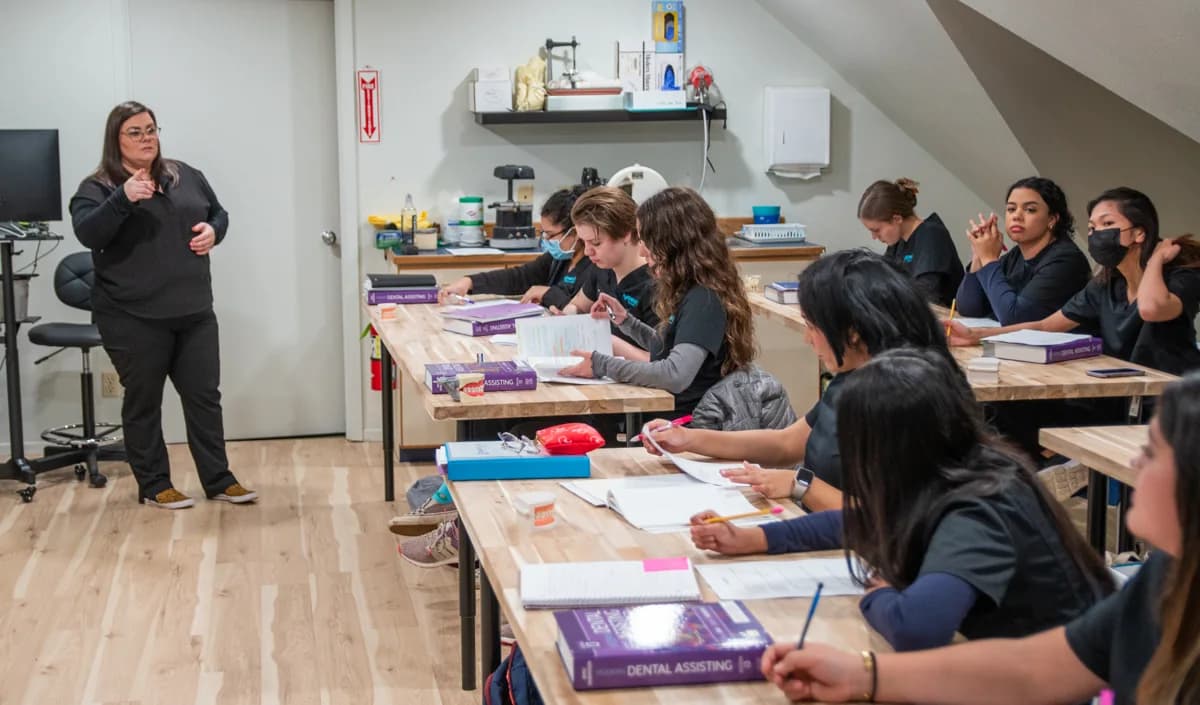
It can be possible, but the answer depends on your work schedule and the time you can arrange for the externship. At Accelerated Assisting, the twelve-week program combines two 6–9 PM class nights each week, online lessons, and 80 hours of supervised office experience. The class nights are only one part of that commitment.
Before enrolling, put all four pieces on a calendar: classes, study, travel, and externship shifts. That is more useful than deciding from the phrase ‘evening program’ alone.
Start with the two class nights
Hillsboro classes and the Portland-area campus in Gresham meet Monday and Wednesday evenings. Salem classes meet Tuesday and Thursday evenings. Every campus uses a 6–9 PM class window.
Work backward from the start time. Include the trip from your job, changing into scrubs, eating, and any school or childcare pickup. Check the trip at the time you will actually travel, including the journey home after class.
Give online study its own space
Online lessons are flexible about when you work on them, but the material still needs attention before hands-on practice. Choose repeatable study blocks rather than relying on spare time at the end of a long day.
For example, you might reserve part of Sunday for the next module and a shorter session between class nights to review terminology. This is a planning example, not an estimate of the hours every student will need. Ask admissions about the current weekly workload and adjust after you see the first module.
- Choose a place where you can hear lessons and concentrate.
- Check the device and internet requirements before class starts.
- Allow extra time for a topic that takes more practice.
- Plan one backup study block for a week when work runs late.
Plan the externship before you need it
The externship is 80 hours in a working dental office. The host office's operating hours and supervision determine what shifts are available. Evening classes do not mean that every externship can happen in the evening.
Eighty hours could be ten eight-hour days or twenty four-hour shifts. Those are examples of the arithmetic, not promised placements or schedules. Discuss the actual days, location, start point, and completion deadline with the school and host office before changing your work commitments.
- Could your employer change a shift or approve leave?
- Are your regular days off also days a host office is open?
- How much travel time can you manage between the two workplaces?
- Who will help resolve a scheduling conflict with the placement?
Put the full cost of attendance on paper
Start with the published program cost, then add commuting, parking where applicable, meals, childcare if needed, and any wages you would lose while completing externship hours. Include outside exam and certificate fees as well. These costs differ for each student.
A payment plan changes when tuition is paid; it does not create more hours in the week. Review the written payment terms alongside your calendar so both plans are workable.
Have three conversations before enrolling
With your employer, discuss the specific evenings and any flexibility needed later. With the people who share your responsibilities at home, agree on pickups, meals, or coverage. With admissions, confirm the campus schedule, attendance and make-up policies, study expectations, and externship arrangements.
If those pieces do not fit the next cohort, ask about a later start. Choosing a term you can attend consistently is a practical way to give yourself room to learn.
Common questions
Is the entire program completed during evening classes?
No. In addition to two evening classes each week, you complete online work and an 80-hour externship. Confirm host-office hours when planning around your job.
Can I arrange externship shifts around my work schedule?
Discuss your availability with admissions and the host office. Available shifts depend on the office and supervision; a particular schedule cannot be assumed before it is agreed.