September 19, 2026 · 4 min read
Returning to school for dental assisting when you feel out of practice
What to ask, how to prepare, and how to build a study routine when you are considering a career change after time away from school.
By Accelerated Assisting, career guides team
Planning a career change at 30, 40, 50, or beyond
Age alone does not tell you whether the daily work, training schedule, or cost will suit you. Start with your actual priorities: the work you want to do, household commitments, and the time you can set aside to learn. Avoid comparing your starting point with someone whose responsibilities are different.
Translate previous experience into concrete strengths without treating it as clinical training. Managing a busy front desk, following a detailed process, or communicating with customers can give you useful interview examples. You still need to learn the dental role and meet the qualifications required for specific duties.
Before leaving a current position, compare the full training and transition budget, including benefit changes and any reduced work hours. There is no promised age-based hiring outcome or guaranteed time to recover the cost of school. Use actual program details and, later, written job offers to make the decision.
If you have not taken a class in years, it is reasonable to wonder whether you will remember how to study or feel comfortable asking questions. A useful first step is to learn what the program expects, rather than deciding you should already know the material.
Accelerated Assisting does not require previous dental experience or a college degree. The published entry requirement is a high school diploma, GED, or equivalent. Admissions can explain which documentation applies to your situation.
Look at the work before deciding on the school
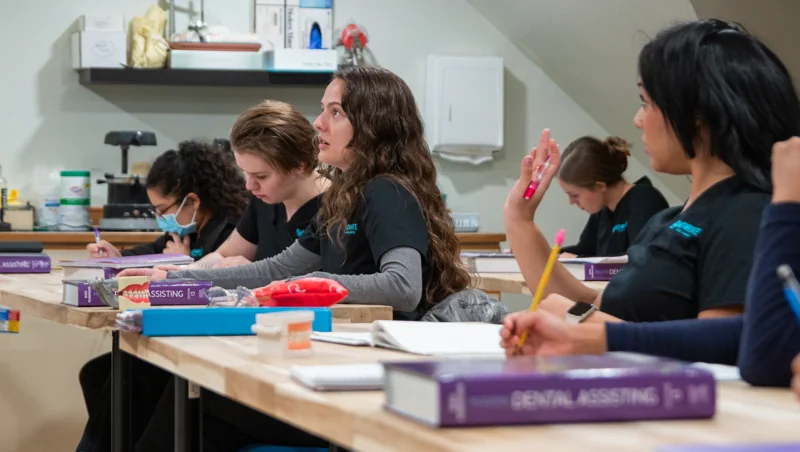
Read the curriculum and ask to see the learning environment. Dental assisting involves practical tasks, patient communication, preparation, and careful routines. Think about which parts interest you and which you want to understand better.
Watch student stories as individual experiences. They can give you questions to ask, but another person's confidence, pace, or job outcome is not a promise about your own.
Build a small routine you can repeat
Choose a regular study window and test it for a week before enrolling. Is that time actually available after work and other responsibilities? Where will you study, and what interrupts you? Making those details visible helps you choose a realistic start date.
- Keep a short list of unfamiliar terms to revisit.
- Explain a concept back in your own words to check your understanding.
- Write down questions while you study so you can bring them to class.
- Review feedback after hands-on practice and identify the next thing to work on.
Ask how support works in practice
Ask who you contact when you do not understand a lesson, how feedback on practical skills is given, and what happens if you miss a class. Request the attendance, make-up, and completion policies in writing.
If you need an accommodation or have an accessibility question, describe what you need to admissions before enrolling. Ask about the actual process and available arrangements rather than relying on general assurances.
Check the practical pieces early
Confirm the technology used for online lessons and how you will access it. Plan the journey to class and home again. Review tuition, outside exam fees, and payment terms. Include the 80-hour externship in your schedule discussion; it is a separate commitment from the two evening class nights.
You do not have to solve everything in one conversation. A campus visit, the program catalog, and a written list of questions can help you make a decision you understand.
Common questions
Do I need dental experience before applying?
No. The program teaches introductory dental terminology and clinical skills. Review the diploma/GED requirement and other enrollment terms with admissions.
Can I visit before deciding?
Contact admissions to request a campus visit and confirm an available time. Bring questions about the schedule, learning environment, and support you need.